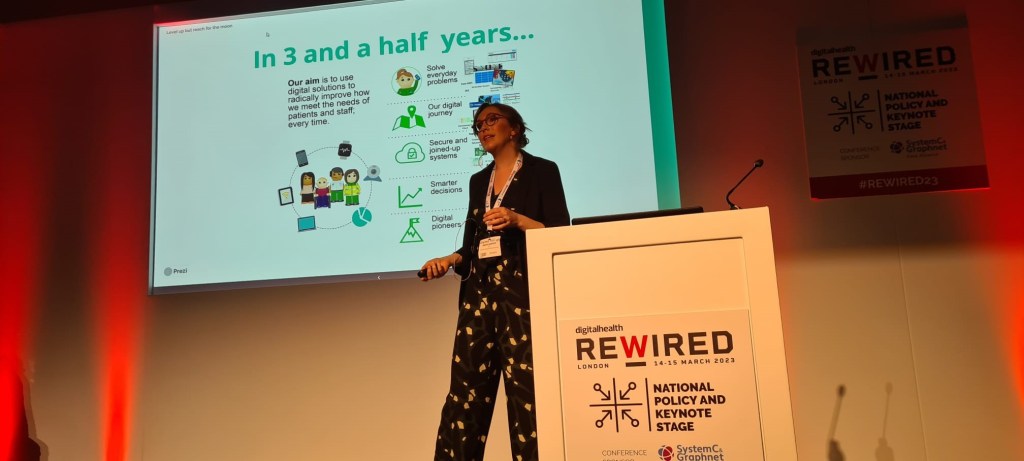
After 3 and a half years with my head down focussed on the task at hand, I decided it was time to start to share our story. Instead of my usual blog I thought I’d share the script from the presentation I gave on the keynote / policy stage at Digital Health Rewired conference recently. The theme I was asked to talk about was ‘levelling up in a time of austerity’ and I talked about how we’d not only levelled up but also established ourselves as innovators. I could have talked all day but only had 7 minutes hence needed to script it!
I’ve also shared the link to the prezi so you can see the visuals. You’ll see lots of pictures of the team and people who have helped along the way. I would have loved to put everyone in there but it was mostly about what pictures I had to hand so please know if you’re not in there you’re just as important a part of the team and the journey we’ve been on.
https://prezi.com/view/wY6CUZcME3opJxPSubEd/
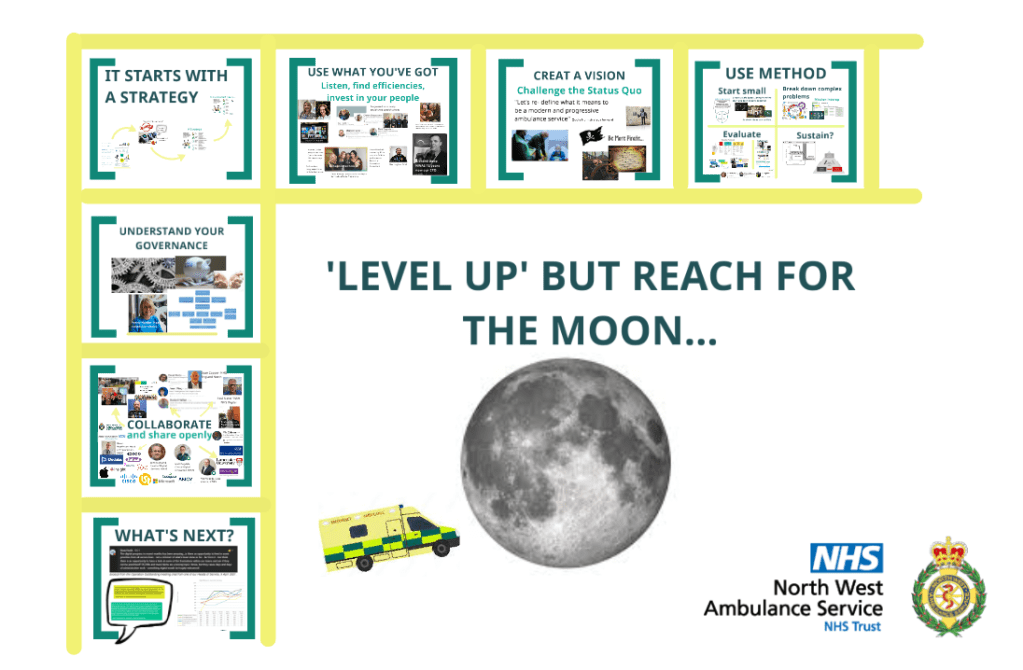
And so it began…
I’m going to talk about how at the North West Ambulance Service in four years we have gone from being negative outliers on a journey to rapidly increase our digital maturity, meet minimum standards but also create the conditions for innovation and improvement that have enabled digital transformation at pace – how we have ‘levelled’ up but in doing so reached for the moon.
I’ve worked in the NHS for over two decades specialising in improvement and innovation and I got frustrated at how difficult change seemed to be when technology was involved. Surely, I thought digital, data and technology are the key enablers to so much we want to achieve – the potential disrupters to enable us to leap to a different future– but somehow the leap often wasn’t happening, we seemed constrained by lack of investment, skills, bureaucracy, governance and I wanted to figure out how to unlock digital transformation.
I’ve been the CIO at NWAS for 3 and a half years now. When I started we were in a difficult position – our telephony was about to fall off a cliff (which is your number 1 concern as an ambulance service!) we had lots of unsupported systems, no EPR, infrastructure that needed replacing, lack of alignment with other departments and a brilliant but stressed team who were known for saying ‘no, you can’t do that’ and actually they were right, we weren’t really safe to do anything. We had lots of alarming reports telling us how bad things were and the Board were worried.
Our digital strategy had been published just before I started, we didn’t have any huge investment, we weren’t a digital exemplar, but we were clear that we wanted to get the basics right and strive for innovation and excellence.
What did we achieve?
I’m going to focus on ‘how’ rather than ‘what’ we did, but in short in 4 years we have replaced and upgraded pretty much our entire infrastructure (including the telephony thank goodness!), rolled out new devices, new critical systems, our first EPR, significantly increased cyber security and resilience, hugely improved access to data and have also established ourselves as leaders of innovation in the ambulance sector and beyond.
We now have lots of lovely audits giving us (mostly) substantial assurance, about half way through we did a maturity assessment against other ambulance services which showed how we’ve significantly improved our position and we have a suite of digital measures that we track over time that show our progress.
I want to be clear that this required funding and we have worked our socks off to get as much of the funding available nationally as we could get but we also did a lot for free using the budget we had, the people we had and through partnerships – so given the focus of this session on austerity I’m going to consider how we used what we had.
Use what you’ve got – listen, find efficiencies and invest in your people
You can pay a fortune for external reviews and reports but I’m very confident that if you listen carefully your teams will be able to tell you exactly what the problems are and what the solutions are and this was my first and most important step.
Next we made friends with and worked hard with finance. Digital budgets are complex and through a lot of hard work three years in a row we’ve been able to find efficiencies in the non pay and use it to invest in new roles and progression and we still managed some significant CIP.
We worked hard to invest in the people we had – and not just progression opportunities but making sure that people are doing the work they actually want to do. We asked people to come forward for training and development. We worked to find the clinical staff who wanted to work with us in the digital space and created our network of digital champions.
We did bring a small number of new people with specialist skills in, but many of the key people that have led this change were already here – including our now CTO Richard Done who had been at NWAS 15 years when I started as the trust continuously tried to externally recruit a CTO. All we needed to do was listen to and create the right conditions for the people we already had to thrive.
Create a vision and challenge the status quo
Levelling up is a not a very sexy goal and it’s not a term I like – our strategy set out a clear vision to maximise technology in a way that was exciting and our focus is on staff and patients – this isn’t about technology for us this is about saving lives.
We are also pretty open about wanting to disrupt the status quo and you may have seen my deputy Jonny Sammut last year talking about being more pirate which is a key part of our ethos.
Use method
Method is really important for us. We started with some simple improvement methods to enable testing, creating space for failure and learning. We created a digital design forum where any staff member can bring a problem or an idea and we’ll find a way to test a solution, all the right digital people are there, cyber, IG, CTO etc and we made an agreement (which remains uncomfortable to this day) with our exec that we would have space for innovation ‘on the edge’ and that we would not ask for permission to do every single small scale test as long as it was safe.
We built skills in agile that have helped us tackle our big complex challenges like interoperability. We’ve progressed now our understanding, learning from our mistakes where we need more focus on quality processes and control to sustain change. You can’t innovate from a broken process and then walk away and expect it to sustain. We have also developed in house skills in evaluation and have worked to understand the capability of our staff through our digital capability survey. We’re now working hard to formalise the process whereby innovations once tested progress in to the formal project / scale up processes.
Use your Governance Processes
Governance is there to keep us safe and it can sometimes make change and innovation feel difficult – but it can be opposite if you really get close to how it works in your organisation, make friends with your corporate affairs team, use your Board Assurance Framework to make sure the board understand and own your risks.
Collaborate
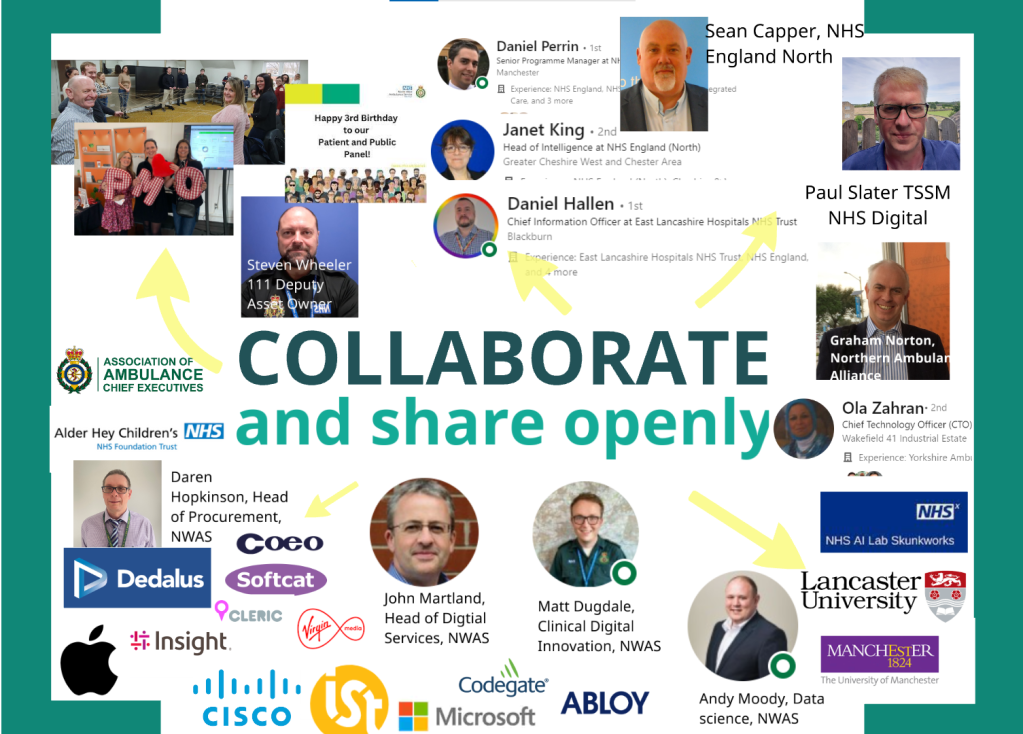
I’m really proud of collaborative approach – the work we’ve done with our PMO who are so supportive, work around asset ownership with the clinical teams. Externally we’ve positioned our goals aligned to others who have the skills, expertise, experience and capacity we need with whatever we can offer in return – from programmes being run by the region aligned to our goals around interoperability, training and support from national bodies such as TSSM / NHS Digital, our partnerships with the Northern Ambulance alliance, partnerships with universities to support our evaluations, interns and placements for data science and partnerships with suppliers. We have a few people in the team who are really good at working with suppliers – you can get so much more from suppliers – free training and consultancy, working together to develop new solutions – if you work together as partners. Make sure you have your procurement team involved too!
To the moon…
We’ve done a lot in 4 years and I would say we have ‘levelled up’ although there are still plenty of basics to get right and lots more we need to do in particular with citizen co design. There are so many things that we’ve just started to explore that could make a huge difference, the opportunities are endless and we’re only just getting started on our moonshots.
I’ve tried to focus on some of the things you can do for free, but I want to be clear that investment is required and it would be dangerous to imply otherwise. We need to have clearer expectations around investment set nationally and we need to make national funding more consistent, planned and easier to access.
I hope I have shown that it is possible to level up and innovate at the same time, the importance of collaboration and most importantly that much of this can be done with the people you have if you support them to thrive. Thank you.
 Abigail blogs